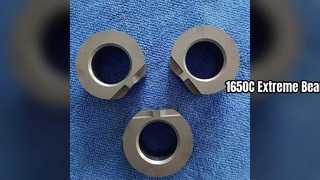
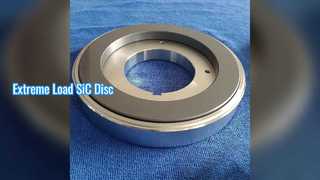
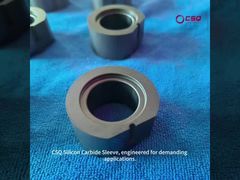
SiC Thrust Disc Extreme Loads Corrosion Resistance

Ceramic Sliding Bearing
January 09, 2026
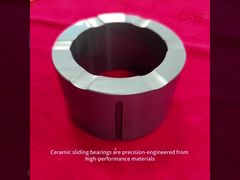
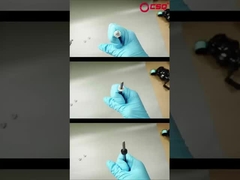
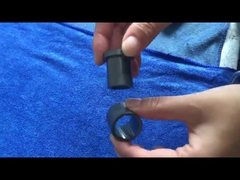
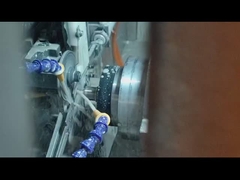
Brief: Join a quick walkthrough that focuses on what matters to users and operators. This video demonstrates the SiC Thrust Disc engineered for extreme axial loads, showcasing its corrosion resistance and high thermal conductivity in demanding applications like mechanical seals and thrust bearings.
Related Product Features:
  • Exceptional wear and abrasion resistance from a Silicon Carbide face, one of the hardest materials available.
  • High corrosion resistance with a stainless steel substrate and inert SiC face for harsh chemical environments.
  • Designed to withstand extreme pressure and perform reliably under high axial loads.
  • Low friction coefficient and high thermal conductivity minimize heat generation and prevent thermal seizure.
  • Robust design with a stainless steel core for strong mechanical integrity and secure mounting.
  • Suitable for subsea, marine, chemical processing, and high-performance automotive and aerospace applications.
  • Pressureless sintered Silicon Carbide offers superior chemical stability against acids and alkalis.
  • High hardness (2800 HV5) and elastic modulus (410GPa) ensure durability and long service life.
FAQs:
  • What are the typical applications for the SiC Thrust Disc?
    It is used in mechanical seals for pumps and mixers, thrust bearings, subsea and marine equipment, chemical processing pumps, and high-performance automotive and aerospace systems like turbochargers.
  • How does the SiC Thrust Disc handle extreme conditions?
    It combines a wear-resistant Silicon Carbide face with a stainless steel substrate to withstand high axial loads, corrosion, and harsh chemicals, while its low friction and high thermal conductivity reduce heat-related risks.
  • What are the key material properties of the pressureless sintered Silicon Carbide used?
    Key properties include a maximum temperature of up to 1650°C, low density (3.15-3.18 g/cm³), high thermal conductivity (120 W/m°K), high hardness (2800 HV5), and superior resistance to acid and alkali corrosion.