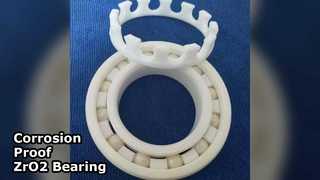
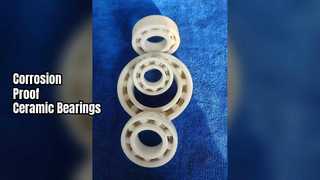
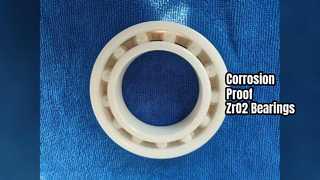
Brief: Ever wondered how a bearing can withstand harsh chemicals and high speeds without lubrication? This video showcases the 2206 Full Zirconia Ceramic Ball Bearing in action, demonstrating its corrosion-proof performance and high-speed capabilities in various industrial applications.
Related Product Features:
Constructed with high-purity Zirconia Ceramic rings and balls for exceptional corrosion resistance against strong acids, alkalis, and solvents.
Features a PEEK cage offering superior self-lubrication with a very low coefficient of friction for reduced wear.
Provides excellent electrical insulation to prevent electrical pitting from VFD drives, making it ideal for motors and precision instruments.
Non-magnetic and 45% lighter than steel, suitable for sensitive environments like semiconductor manufacturing and medical devices.
Operates effectively in extreme temperatures from -200°C to +250°C with high toughness and wear resistance.
Available in P6 and P5 precision grades, ensuring high performance and reliability in demanding applications.
Enables maintenance-free operation with its self-lubricating design, ideal for food, pharmaceutical, and chemical equipment.
Manufactured to international standard dimensions, supporting high-speed operation with reduced centrifugal force.
FAQs:
What materials are used in the 2206 Full Zirconia Ceramic Bearing?
The bearing features inner and outer rings and rolling elements made from high-purity Zirconia Ceramic (ZrO2), combined with a PEEK cage and double PTFE seals for enhanced performance.
How does this ceramic bearing perform in corrosive environments?
It offers exceptional corrosion resistance, effectively withstanding strong acids, alkalis, and organic solvents, making it ideal for chemical and plating equipment.
Can this bearing operate without lubrication?
Yes, the self-lubricating PEEK cage allows for maintenance-free operation in dry or boundary lubrication states, reducing friction and wear significantly.
What are the key applications for this zirconia ceramic bearing?
It is used in chemical equipment, food and pharmaceutical machinery, variable frequency drive motors, semiconductor manufacturing, precision instruments, and high-temperature or vacuum environments.